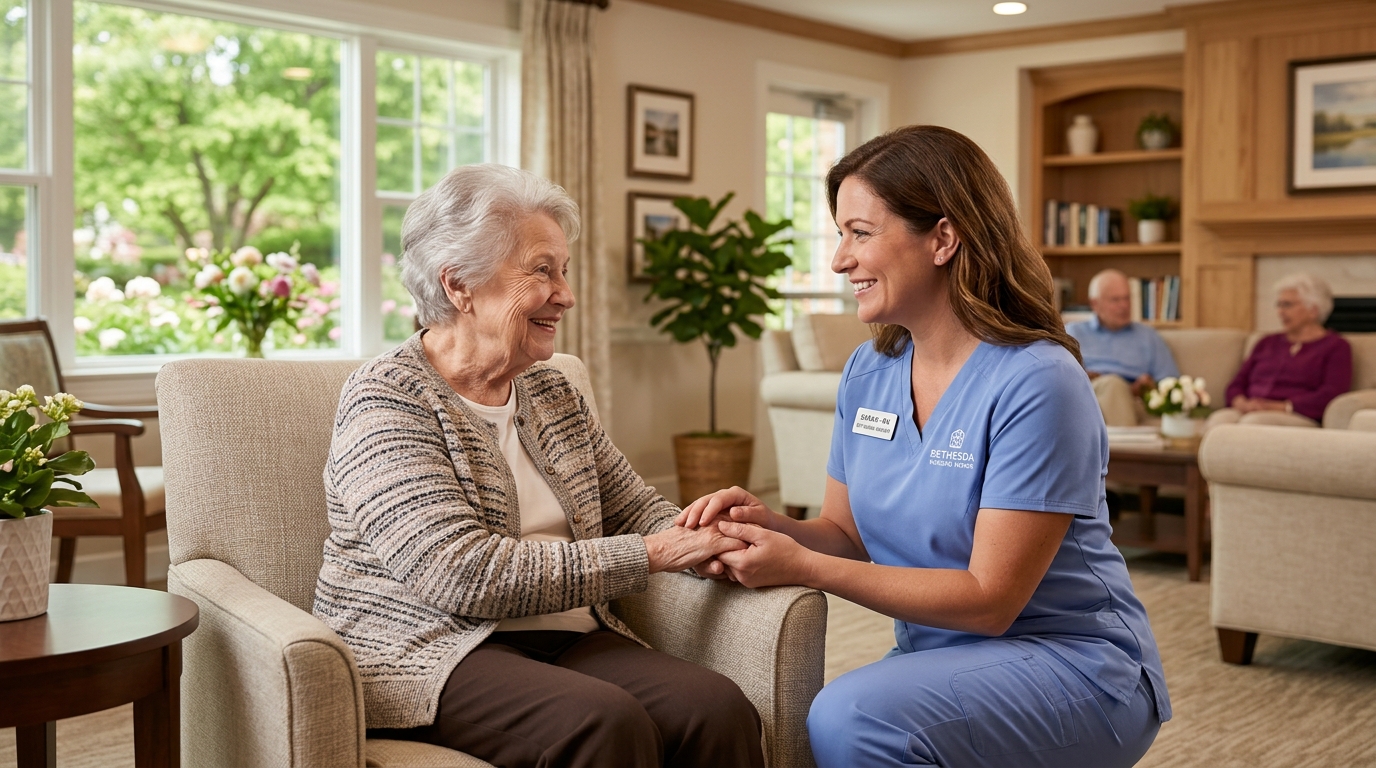

Skilled nursing homes in Maryland provide a high level of medical care and rehabilitation services for individuals who require 24/7 licensed nursing supervision, often following a hospital stay or for managing complex chronic conditions, distinct from the supportive services offered in assisted living facilities. These facilities are specifically designed for residents needing intensive medical care, therapy, and assistance with daily activities that cannot be safely provided in a less restrictive environment, ensuring constant access to licensed professionals like registered nurses (RNs) and licensed practical nurses (LPNs).
When families in areas like Laurel, Prince George's County, and Howard County begin exploring senior care options, it's crucial to understand the distinct role of skilled nursing facilities. Unlike assisted living, which focuses on personal care and maintaining independence, skilled nursing care is medically intensive. It provides around-the-clock medical attention, often short-term for recovery after a major health event, but can also be long-term for individuals with advanced chronic illnesses requiring continuous medical oversight. The core purpose is to provide highly specialized care that cannot be managed at home or in a less medically equipped setting.
A wide range of critical medical and rehabilitative services are provided in skilled nursing homes. On the medical side, this includes expert wound care, intravenous (IV) medication administration through IV therapy, precise medication management, ventilator care, pain management, and specialized catheter or ostomy care. These services are delivered by a team of highly trained licensed professionals, ensuring that complex medical needs are met with precision and vigilance. Beyond direct medical treatments, these facilities also prioritize comprehensive rehabilitative therapy to help residents regain strength and functionality, contributing significantly to their recovery and quality of life.
Rehabilitation is a cornerstone of skilled nursing care, especially for those recovering from an injury or illness. Physical therapy (PT) is essential for restoring mobility, improving strength, enhancing balance, and reducing pain, helping residents get back on their feet. Occupational therapy (OT) focuses on practical daily living skills, assisting individuals with tasks like dressing, bathing, eating, and adapting to any physical limitations they may have. Additionally, speech-language pathology (ST) addresses communication disorders, swallowing difficulties, and cognitive retraining, all vital for a holistic recovery. While the primary focus is medical, skilled nursing homes also integrate personal care assistance with activities of daily living (ADLs) and offer social activities and counseling to support residents' emotional well-being, acknowledging that comprehensive care extends beyond just medical treatment.
One of the most common questions we hear from families in Maryland is how to differentiate between the various senior care options. Skilled nursing is distinct from assisted living, memory care, home health, and hospice. Skilled nursing facilities (SNFs) are for individuals needing intensive medical care and 24/7 licensed nursing supervision, often post-acute or for severe chronic conditions. In contrast, assisted living communities, like the small, residential homes at CR Care Group in Laurel, Clarksville, and Sandy Spring, focus on personal care assistance, medication reminders, and social engagement for those who do not require constant medical oversight. Memory care, often a specialized wing within assisted living or a dedicated facility, provides tailored support for individuals with Alzheimer's or other dementias. Home health care delivers medical services at home but for less intensive needs, while hospice care provides comfort-focused support for life-limiting illnesses, which can sometimes be delivered within a skilled nursing facility.
There are specific scenarios where skilled nursing care becomes the most appropriate and safest option for your loved one in Maryland. These often involve significant medical needs following a major health event. For example, individuals recovering from a hip fracture, heart attack, major surgery, or an intensive stroke often require the specialized environment of a skilled nursing home for their recovery and rehabilitative therapy. Similarly, managing complex wounds or infections that necessitate daily IV therapy and antibiotics often demands the vigilant care provided by registered nurses in a skilled nursing setting. For those in advanced stages of chronic diseases like Parkinson's, Multiple Sclerosis, or ALS, where constant medical oversight and assistance with complex needs are paramount, skilled nursing facilities offer the necessary level of support. Even short-term respite care for family caregivers of individuals with very high medical needs can be provided in these facilities, offering temporary relief while ensuring continuous professional care.
Choosing the right skilled nursing facility for a loved one in Maryland, especially in areas like Prince George's County or Howard County, requires thorough research and careful consideration. Begin by verifying the facility's licensing and certification with the Maryland Department of Health, and check if they are certified for Medicare or Medicaid, which is crucial for understanding payment options. It's also vital to inquire about staffing ratios, specifically the number of residents per registered nurse, LPN, and CNA, to ensure adequate medical attention and personal care. Don't hesitate to ask about staff specialization, such as expertise in wound care or dementia care, as this can directly impact the quality of services provided. Evaluating the quality of care and outcomes is also important, which can be done by reviewing Medicare.gov's Care Compare ratings, state inspection reports, and resident satisfaction surveys, providing valuable insights into a facility's performance and reputation.
When you're ready to take practical steps in your search, start with online research using resources like Medicare.gov's Care Compare and the Maryland Department of Health website, alongside individual facility websites. Schedule tours to multiple facilities in areas like Laurel, Columbia, Silver Spring, or Clarksville; ideally, try to visit during different times of the day, perhaps even unannounced, to observe daily operations and resident engagement. Prepare a list of critical questions covering everything from care plans and staff turnover to discharge planning, activities, and resident rights. Finally, checking references and reading online reviews can provide invaluable perspectives from other families who have experienced the facility's care. Consider the facility's proximity to family members in surrounding communities like Burtonsville, Fulton, Beltsville, Dayton, or Highland, as easy access can greatly support your loved one's emotional well-being.
Understanding the costs and payment options for skilled nursing care in Maryland is another crucial step. For short-term skilled nursing care following a qualifying hospital stay, Medicare coverage may be available, but it's important to understand the specific eligibility criteria and duration limits. For long-term care, Maryland Medicaid can cover costs for eligible individuals with limited income and assets, though the application process can be complex. Private health insurance policies often have benefits for skilled nursing, so reviewing your loved one's policy details is essential. For those not covered by other means, private pay is an option, where costs are paid out-of-pocket. Additionally, veterans benefits may be available for eligible individuals, so exploring VA programs is a worthwhile step for military families.
While skilled nursing facilities are indispensable for high-level medical care, many families discover that their loved one's needs align better with assisted living, especially if they don't require 24/7 licensed nursing care. Assisted living is ideal for seniors who need assistance with activities of daily living (ADLs), medication management, and social engagement, but still value their independence and a vibrant community setting. At CR Care Group, we offer small, residential-style assisted living homes in Laurel, Prince George's County, and Howard County, including our beautiful CR Care of Clarksville 5-acre property. Our homes are licensed Level 3, the highest care level in Maryland, and maintain an exceptional 3:1 caregiver-to-resident ratio, ensuring personalized, attentive support that large institutional facilities often cannot match. We pride ourselves on transparent, fixed-rate pricing with no hidden fees, providing all-inclusive care and even in-house medical services for convenience and peace of mind.
Understanding the full continuum of care is key to finding the right support in Maryland, as needs can evolve over time. This includes knowing when skilled nursing, assisted living, memory care, or hospice support might be most appropriate. It's about assessing current needs accurately and anticipating future ones to choose the most suitable environment that promotes dignity and well-being. CR Care Group provides comprehensive assisted living, specialized memory care, respite care, and compassionate hospice/palliative care support, offering a supportive bridge for many families navigating complex senior care decisions. We believe in providing a true home environment where residents are part of a family, not just a facility, offering a personalized alternative to larger institutions in Maryland City and beyond.
The main difference lies in the level of medical care provided. Skilled nursing homes offer 24/7 licensed nursing supervision and medical services for complex needs, often for short-term rehabilitation or long-term chronic illness management. Assisted living, like CR Care Group, focuses on personal care, medication reminders, and social support for those who don't require constant medical oversight, emphasizing independence in a homelike setting.
Payment for skilled nursing care in Maryland can come from several sources. Medicare may cover short-term stays after a qualifying hospital visit, while Maryland Medicaid can cover long-term care for eligible individuals with limited income and assets. Private health insurance, private pay (out-of-pocket), and Veterans benefits are also common payment methods, depending on the individual's circumstances and policy details.
To find a reputable skilled nursing facility in Prince George's County or Howard County, start by using online resources like Medicare.gov's Care Compare to view quality ratings and state inspection reports. Schedule tours to multiple facilities, ask about staffing ratios and medical services like rehabilitative therapy, and speak with current residents' families for their insights. Always verify their licensing with the Maryland Department of Health.
Skilled nursing homes typically offer a comprehensive range of rehabilitative therapy services. This includes physical therapy to improve mobility and strength, occupational therapy to enhance daily living skills, and speech-language pathology to address communication and swallowing difficulties. These therapies are crucial for recovery from injuries, surgeries, or managing chronic conditions, all overseen by licensed professionals.
Yes, transitions from a skilled nursing facility to an assisted living facility are common and often a positive step once a resident's medical needs have stabilized and they no longer require 24/7 licensed nursing supervision. At CR Care Group, we often work with families to facilitate such transitions, providing a supportive, homelike environment with personalized care for those ready for a less intensive setting.
If you're exploring assisted living options in Howard County, Prince George's County, or Laurel, we'd love to show you around one of our small, residential homes. You can schedule a visit at https://crcaregroup.com/ or call us at (301) 483-0001 — no pressure, just honest answers and a chance to see what makes our family-centered approach unique.