

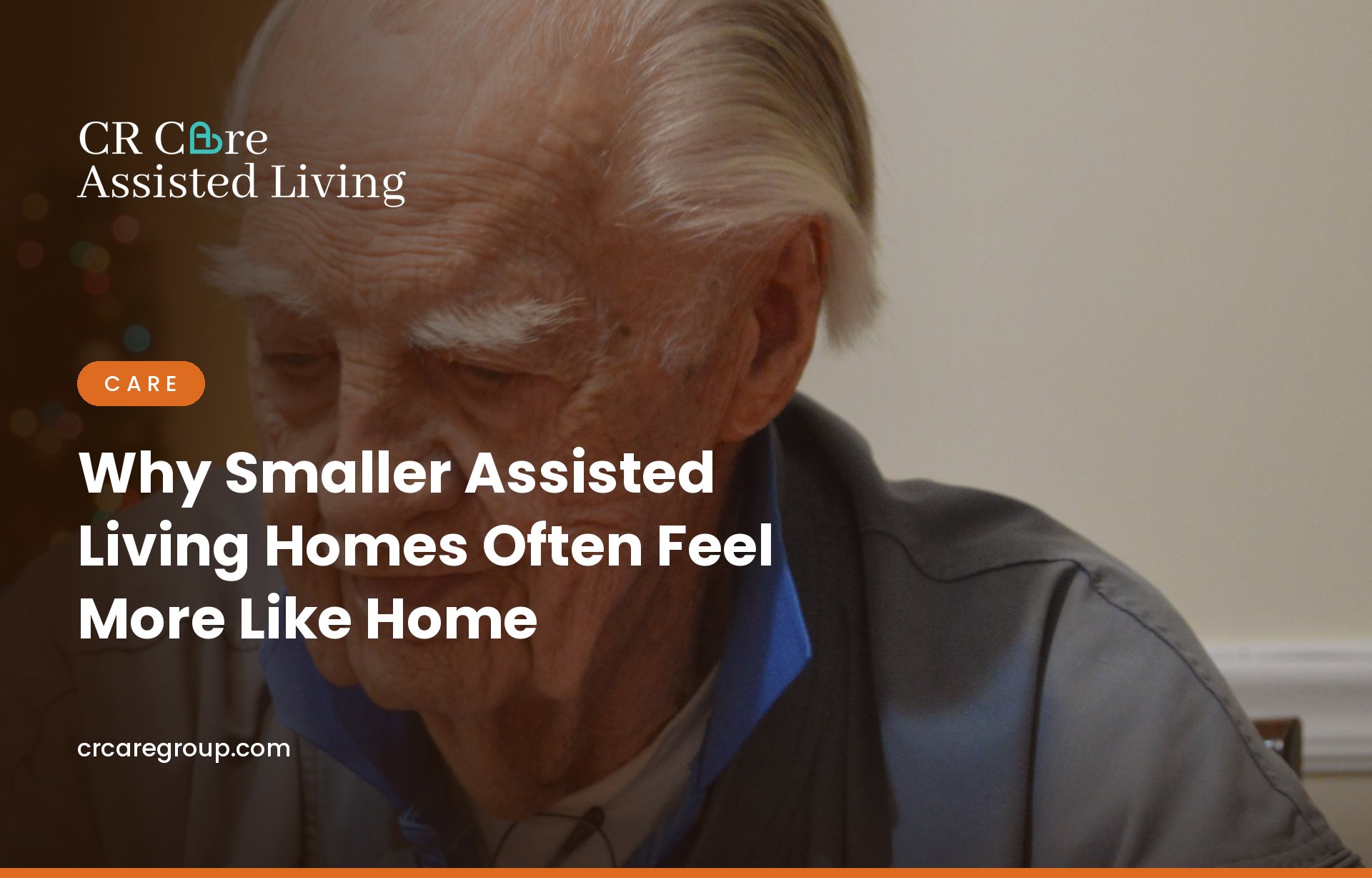
Making the decision to transition a loved one into assisted living is a significant life event. It is a choice rooted in love, careful consideration, and the desire to find an environment that offers comfort, dignity, and a true sense of belonging through home-like assisted living.
With so many assisted living options available, families often feel overwhelmed. While large assisted living communities may appear impressive during a tour, many families discover that bigger does not always mean better when it comes to personalized senior care. This is why the residential assisted living model, like the one offered by CR Care Group - often delivers a more meaningful, relationship-centered experience for seniors.
When entering a large assisted living facility, the scale can be striking. Grand dining halls, long corridors, and full activity calendars are common. However, size often comes at the cost of individualized care.
In larger communities, staff-to-resident ratios are typically higher. With dozens or even hundreds of residents, caregivers may struggle to provide the level of person-centered senior care seniors need to feel truly known. As a result, care can feel transactional rather than relationship-based caregiving, especially for residents who require memory care or dementia care in assisted living.
Small assisted living homes and residential assisted living homes are intentionally designed to feel intimate and familiar. By supporting fewer residents, these homes mirror traditional living environments and promote aging in place support.
In small group home care models, caregivers build genuine relationships with residents. They know personal preferences, daily routines, and individual histories - not just medical charts. This level of relationship-based caregiving ensures residents are never “lost in the crowd,” a common concern in large assisted living communities.
In small assisted living homes, subtle changes in mood, appetite, or physical health are noticed quickly. Because caregivers are consistently present, they can respond immediately to emotional or medical needs. This level of attentive senior care adds a layer of safety that is difficult to replicate in large-scale facilities and is especially valuable for memory care residential homes and dementia care assisted living settings.
One of the most overlooked factors in assisted living quality is staff consistency. Large facilities often experience higher turnover, which can be distressing for seniors who rely on routine and familiar faces.
Smaller assisted living homes in Maryland and across the USA typically benefit from more stable caregiving teams. At CR Care of Sandy Spring, residents see the same caregivers daily, reinforcing emotional security and trust.
This consistency supports:
When evaluating private assisted living homes in the USA, it helps to look beyond marketing materials. A grand lobby may look appealing, but it does not provide care during the quiet moments that matter most.
When touring residential assisted living homes, families should ask:
Ultimately, it is not luxury features that create quality of life. It is person-centered care, emotional connection, and consistent support. In many cases, smaller assisted living homes offer the greatest sense of comfort and belonging.
At CR Care Group, we specialize in residential assisted living in Maryland, offering memory care residential homes, respite care residential homes, and palliative care assisted living in a truly home-like assisted living environment.
Our mission is to provide personalized senior care rooted in dignity, trust, and meaningful human connection, because the best care happens where people feel most at home. Contact us today to learn how our small, home-like assisted living communities can provide the comfort and care your loved one deserves.